


How Long Do Car Batteries Last? Lifespan, Warning Signs, and Replacement Tips
Your car starts fine all week. Then one morning, you turn the key or press the start button, and the engine barely turns over. The lights might come on, but the car refuses to start.
A weak battery is one possible reason. If you’ve had the same battery for several years, it’s reasonable to wonder how much life it has left.
Most car batteries last between three and five years, but there’s more to the story. Heat, short trips, electrical problems, and battery type can all affect how long yours will work. Understanding those factors helps you decide when testing or replacement makes sense.
Most conventional 12-volt car batteries last about 3 to 5 years. Batteries exposed to extreme heat, frequent short trips, or repeated discharge may fail sooner. Some last longer, but age alone doesn’t tell you whether a battery is healthy. Once yours reaches about three years old, regular testing can help you avoid an unexpected breakdown.
Key Takeaways
- Most conventional car starting batteries last 3 to 5 years.
- Hot climates often shorten battery life.
- Frequent short drives may leave the battery undercharged.
- Slow starting, repeated jump-starts, and unusual electrical behavior deserve attention.
- A fully charged battery can still be too weak to start your engine reliably.
- Battery testing is more useful than replacing a battery based only on age.
What Is the Average Lifespan of a Car Battery?
For most gasoline-powered cars, three to five years is a reasonable expectation for a conventional 12-volt starting battery. According to AAA’s battery lifespan guidance, time, heat, and vibration are major factors that affect how long a battery remains reliable.
Still, not every battery follows that timeline. Someone who drives regularly in moderate weather may get several more years than a driver who makes short trips in a hot climate.
The battery’s condition matters more than its birthday. A four-year-old battery can still pass a health test, while a two-year-old battery with repeated discharge or charging problems may already be failing.
| Battery Age | Typical Situation | What to Do |
|---|---|---|
| Under 3 years | Usually within normal service life | Inspect during regular maintenance |
| 3 to 5 years | Common battery replacement window | Arrange regular health testing |
| Over 5 years | Beyond the usual lifespan | Test and consider replacement planning |
| Any age with starting problems | Battery or electrical-system fault possible | Check the battery and charging system |
These ranges are guides, not strict replacement deadlines. If your car has difficulty starting, don’t assume the battery is the only possible problem. A starter motor, charging system, or electrical connection can cause similar symptoms.
Do AGM Batteries Last Longer Than Regular Car Batteries?
Some vehicles use absorbent glass mat (AGM) batteries instead of conventional flooded lead-acid batteries. AGM designs are often used in vehicles with start-stop systems or higher electrical demands.
AGM batteries can have a longer service life under suitable conditions, but there’s no guarantee that every AGM battery will outlast every flooded battery. Battery quality, charging strategy, temperature, and driving habits still matter. Some AGM batteries may last around five to seven years, but actual longevity varies.
Always use the battery type specified for your vehicle. Replacing an AGM battery with a conventional battery simply because it’s cheaper can cause problems in vehicles designed for AGM charging characteristics.
What Shortens Car Battery Life?
Several everyday conditions can reduce a battery’s useful lifespan. Some slowly damage its internal components, while others prevent it from remaining properly charged.
Extreme Heat
Hot temperatures accelerate battery deterioration and can shorten its useful life.
Frequent Short Trips
Short drives may not give the charging system enough time to replace the energy used during starting.
Long Parking Periods
Vehicle computers, alarms, and other systems can continue drawing electricity while the engine is off.
Excessive Vibration
A battery that isn’t properly secured can suffer damage from repeated movement.
Charging Problems
Alternator or charging-system faults may leave the battery undercharged or improperly charged.
Repeated Deep Discharge
Allowing a starting battery to run very low repeatedly can reduce its ability to hold a charge.
One important point is that several of these problems can happen together. For example, a three-year-old battery in a hot climate may also spend most of its time making short trips. That combination may cause it to weaken sooner than expected.
How Long Do Car Batteries Last in Hot Climates?
Hot weather is particularly hard on conventional lead-acid batteries. High temperatures accelerate chemical reactions that gradually wear down internal components. The damage may happen without obvious symptoms at first.
AAA explains that batteries in cooler northern climates sometimes last five years or longer, while batteries in hot southern climates often last around three years.
You cannot control outdoor temperatures, but you can park in shaded or covered areas when possible. Also, keep the manufacturer’s battery heat shield in place if your car has one.
Does Cold Weather Reduce Battery Life?
Cold weather affects batteries differently from heat. A cold battery has less available starting power, while the engine may require more effort to start. This means a battery that seemed healthy during warm weather can suddenly struggle when temperatures drop.
Cold weather often reveals an already weakened battery rather than being the sole cause of failure. Testing an aging battery before winter is a practical way to reduce that risk.
How Long Does a Car Battery Last With the Engine Off?
Turning off the engine doesn’t mean the battery stops supplying electricity. Your car may continue powering its security system, onboard computers, clock, and remote-entry receiver.
These systems usually draw relatively little electricity, but the drain adds up over time. The battery also naturally loses some charge while sitting unused.
A healthy battery in a properly functioning vehicle may still start the engine after several weeks of parking. However, no dependable period applies to every car.
According to Interstate Batteries’ guide to car battery lifespan, vehicle type, battery condition, temperature, and driving habits all influence how long a battery remains usable. A weak battery or excessive electrical drain can shorten its life considerably.
What If Your Car Will Sit Unused for Several Weeks?
If you won’t be driving for an extended period, a little preparation can help prevent battery problems. This is especially important when the battery is already a few years old.
Battery Storage Checklist
- Make sure the battery is in good condition before storing the car.
- Switch off lights and unnecessary accessories.
- Check the owner’s manual for storage instructions.
- Consider a compatible smart battery maintainer for extended parking.
- Have an unexplained electrical drain diagnosed.
- Check the battery before returning the car to regular use.
A battery maintainer is designed to help keep a battery charged during storage. It differs from leaving an ordinary charger connected without suitable automatic charge control. Follow the equipment instructions and the manufacturer’s recommended connection procedure.
How Long Does a Car Battery Last Fully Charged?
A fully charged battery doesn’t have a fixed number of hours or days of runtime. Its runtime depends on the electrical load, battery capacity, age, temperature, and condition.
For example, a parked car drawing very little power uses its stored energy much more slowly than a vehicle running headlights and accessories with the engine off. The same battery can therefore last very different amounts of time under different conditions.
It’s also important to separate battery charge from battery health.
Battery Charge vs. Battery Health
A battery that repeatedly goes flat may be deteriorating, but the problem could also involve the alternator, wiring, or a component that remains powered when it shouldn’t. Proper testing can help identify the actual fault.
What Are the Signs of a Dying Car Battery?
A failing battery doesn’t always stop working without warning. You may notice that the engine starts more slowly or that electrical accessories behave differently. Sometimes the problem is more noticeable after the car has been parked overnight.
Watch for these symptoms, especially if your battery is three years old or older.
Seven Warning Signs of a Weak Battery
- Slow engine cranking: The engine turns over more slowly than usual.
- Repeated jump-starts: The vehicle repeatedly needs outside power to start.
- Clicking when starting: You hear clicking instead of normal engine cranking.
- Dim lights: Headlights or interior lights behave unusually, especially during starting.
- Electrical problems: Some accessories work inconsistently.
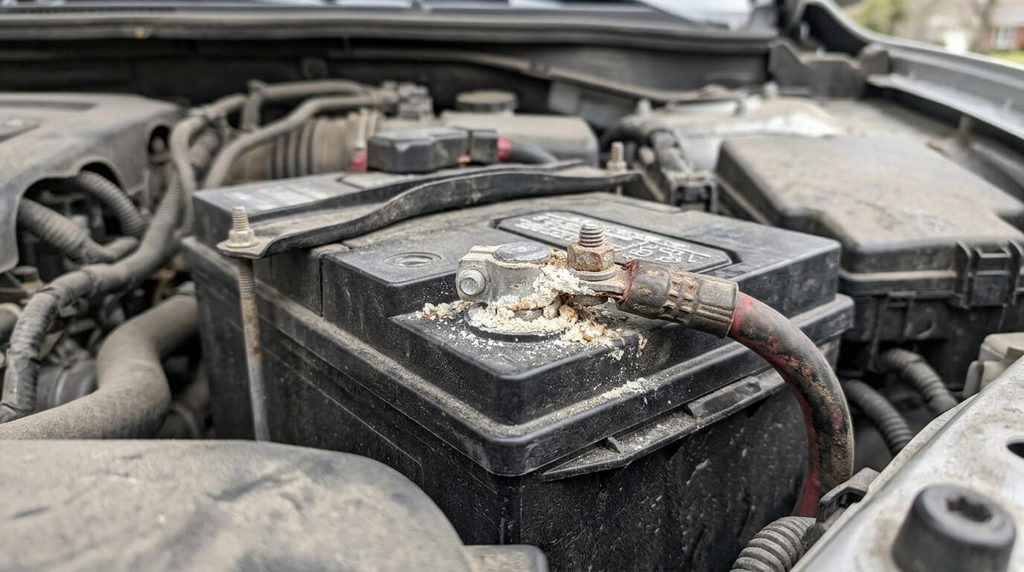
- Terminal corrosion: White, blue, or greenish deposits appear around battery connections.
- Battery damage: The case looks swollen, cracked, or is leaking.
These symptoms don’t confirm that the battery itself is defective. Loose connections, starter problems, and charging-system faults can cause similar issues. That’s why a battery health test is more helpful than replacing parts based on symptoms alone.
How Can You Check Whether Your Car Battery Is Healthy?
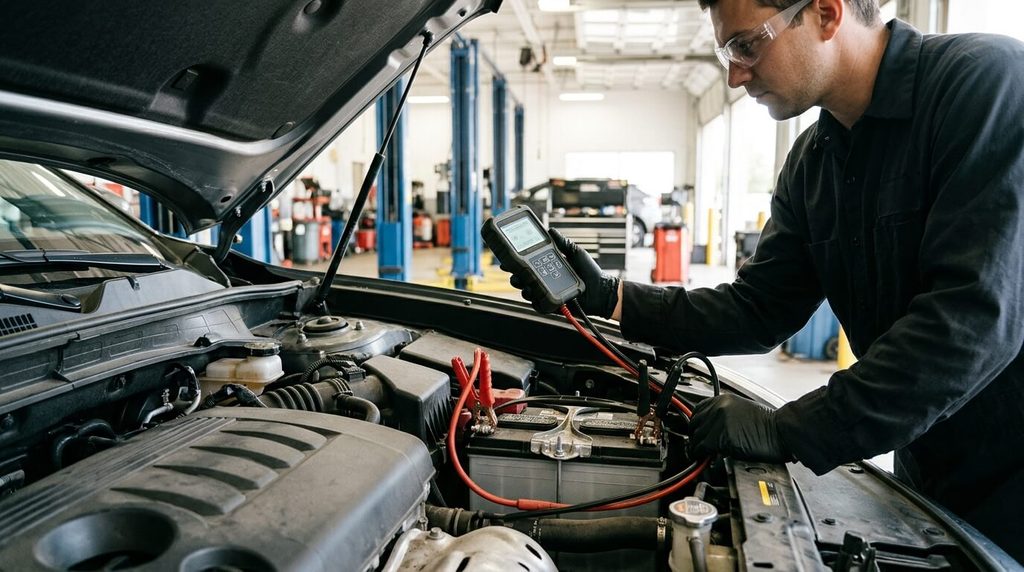
A visual inspection is a useful starting point. Look for obvious corrosion, damaged cables, or a loose battery mounting bracket, but don’t touch exposed electrical connections. A cracked, swollen, or leaking battery needs professional attention.
A technician can measure battery voltage and perform a battery conductance or load test. They may also check the alternator and starting system to determine whether the battery is being charged correctly.
For a conventional 12-volt lead-acid battery at rest, around 12.6 volts often indicates a high state of charge. However, temperature, battery type, recent charging, and vehicle electronics can affect the reading. Voltage alone cannot confirm battery health.
Do not attempt to charge, jump-start, or handle a battery that is cracked, swollen, leaking, or visibly damaged. Batteries contain corrosive materials and may release flammable gases. Seek professional assistance if you notice serious damage, excessive heat, smoke, or a strong unusual odor around the battery.
How to Make Your Car Battery Last Longer
You can’t prevent a battery from aging, but regular care can help it perform more reliably. The best habits are simple and don’t require taking the battery apart. They also make it easier to catch problems before the car refuses to start.
Six Ways to Help Your Battery Last Longer
- Check the battery during regular maintenance. Look for signs of damage or corrosion, and have questionable connections inspected.
- Keep it securely mounted. A proper hold-down prevents excessive vibration that can damage internal components.
- Avoid unnecessary electrical loads. Turn off lights and accessories when the engine is off, particularly during long parking periods.
- Pay attention to short trips. If you mostly drive short distances, consider whether the battery is receiving enough charge and ask for testing if problems appear.
- Use proper storage equipment. A compatible smart battery maintainer can help during extended periods without driving.
- Arrange regular testing as the battery ages. Begin checking battery health around the three-year mark, especially before extreme weather.
It also helps you track your car’s starting performance. If the engine begins cranking more slowly than normal, don’t wait until you need a jump-start every morning. A simple test may reveal whether the battery is aging or whether another electrical fault needs attention.
Should You Clean Corrosion From Battery Terminals?
Corrosion around a battery terminal can interfere with electrical connections. It may appear as a white, blue, or greenish deposit around the terminal posts or cable clamps. However, visible corrosion doesn’t automatically mean the battery has reached the end of its life.
If the battery case is undamaged, terminal cleaning may be appropriate as part of routine service. The correct procedure depends on the vehicle and battery, and some vehicles require special precautions before disconnecting power. If you are unfamiliar with the procedure, have a technician inspect and clean the connections.
When Should You Replace a Car Battery?
You don’t need to replace every battery on its third birthday. However, once a battery reaches three to five years of service, its age becomes an important factor in deciding when to test or replace it.
For example, a four-year-old battery that continues to pass health tests may still be serviceable. A battery that is only two years old but repeatedly fails to start the engine deserves prompt diagnosis.
Consumer Reports also recommends considering battery age and condition before failure. Its car battery buying guide discusses battery fit, freshness, and warranty coverage.
| Situation | Recommended Action |
|---|---|
| Battery is less than 3 years old and works normally | Continue routine checks |
| Battery is 3 to 5 years old | Arrange regular battery health testing |
| Battery is over 5 years old | Test and consider replacement planning |
| Battery repeatedly needs jump-starts | Check battery, charging system, and electrical drain |
| Battery fails an appropriate health test | Replace it with the correct battery for the vehicle |
| Battery is swollen, cracked, or leaking | Avoid handling it and seek professional assistance |
How Do You Know How Old Your Car Battery Is?
Start by checking for an installation sticker, service record, or purchase receipt. Some batteries also have a manufacturing-date code on the case, although the format varies by manufacturer.
Don’t assume the battery is the same age as the vehicle. It may have been replaced by a previous owner or during an earlier service visit. If you cannot identify the date, a battery retailer or repair shop may be able to interpret the code.
What Should You Look for in a Replacement Battery?
The right replacement battery is not necessarily the most expensive one. It must fit the vehicle and meet the manufacturer’s electrical requirements. A battery with the wrong physical size or terminal location can create serious installation problems.
Replacement Battery Buying Checklist
- Confirm the correct battery group size or manufacturer-specified dimensions.
- Match the required battery technology, such as flooded lead-acid or AGM.
- Verify the cold cranking amps (CCA) requirement.
- Check terminal location and cable compatibility.
- Look at the battery’s manufacturing date or stock freshness.
- Compare warranty terms, including the free-replacement period.
- Check whether the vehicle requires battery registration or programming.
- Arrange proper recycling of the old battery.
Some modern vehicles use battery management systems that need to recognize a replacement battery. The installation process may therefore involve more than removing the old one and connecting a new one. If your vehicle requires battery registration or coding, follow the manufacturer’s procedure or use a qualified technician.
Can a Car Battery Last 10 Years?
Yes, a car battery can occasionally last ten years, but that’s unusual. Most conventional car batteries won’t remain reliable for that long. Interstate Batteries acknowledges exceptional cases of batteries reaching ten years, while still giving three to five years as the normal expectation.
A battery that still starts the engine after seven or eight years may seem perfectly healthy. However, starting normally doesn’t prove it has enough reserve capacity for difficult conditions. An old battery can become unreliable without showing dramatic symptoms.
If your battery is well beyond its usual lifespan, test it regularly. Even if it passes, consider the inconvenience of an unexpected failure when planning a replacement.
How Long Does a Battery Last in a New Car?
A new vehicle’s conventional 12-volt battery generally follows the same broad lifespan expectations as a battery installed in an older car. Being in a new vehicle does not guarantee five years or more of service. Climate, driving habits, and battery condition still play important roles.
Some newer cars have additional electrical demands or use specialized AGM batteries. These may require a different charging strategy and replacement procedure. Always check the owner’s manual to find out which battery type is specified.
Hybrid and electric vehicles are different because they have high-voltage propulsion batteries as well as low-voltage electrical systems. The typical three-to-five-year estimate discussed here should not be applied to a vehicle’s main high-voltage battery pack.
How Long Does a Car Battery Last Without an Alternator?
If the alternator fails while a conventional gasoline-powered car is running, the battery may temporarily power essential systems. However, the vehicle is no longer charging normally, and the stored energy will gradually run out.
There is no reliable answer in miles or minutes. Battery condition, electrical demand, temperature, and vehicle design all affect how long the engine might continue running. Eventually, voltage may drop low enough to cause the engine to stall.
If your battery or charging-system warning light comes on while driving, do not assume the vehicle can safely reach a distant destination. Follow your owner’s manual, pull over in a safe location, and arrange professional assistance. A charging-system failure can eventually cause the engine to stall.
A battery warning light doesn’t necessarily mean you need a new battery. It may indicate alternator problems, wiring faults, a slipping or broken drive belt, or another charging-system issue. AAA explains these possibilities in its guide to alternator warning signs.
Common Car Battery Mistakes to Avoid
Many avoidable battery problems begin with small habits that seem harmless. Leaving accessories powered on, ignoring repeated weak starts, or overlooking battery damage can eventually leave you stranded.
Some mistakes also waste money. Replacing a battery without checking why it discharged may not solve the original problem.
Good Battery Habits
- Check battery condition regularly.
- Have older batteries tested.
- Keep the battery securely mounted.
- Follow the owner’s manual.
- Investigate recurring electrical faults.
Battery Mistakes to Avoid
- Repeatedly draining the battery completely.
- Ignoring slow or difficult starting.
- Driving with a charging-system warning.
- Using the wrong replacement battery type.
- Handling a damaged or leaking battery.
Final Thoughts
Most car batteries last three to five years, but that range is a starting point, not a fixed expiration date. High temperatures, frequent short trips, extended parking, and electrical faults can shorten battery life. Some batteries last longer, especially when properly maintained and used under favorable conditions.
If your battery is around three years old, start paying closer attention to its condition and consider regular testing. Slow starting, repeated jump-starts, or signs of physical damage should never be ignored. A timely inspection can help you avoid both unexpected breakdowns and unnecessary replacement costs.
Frequently Asked Questions
Should I replace my car battery after three years?
Not automatically. Three years is a good point to begin regular battery testing, particularly in hot climates. Replace the battery when testing, physical condition, or reliability shows that replacement is necessary.
Can a car battery die after only two years?
Yes. Extreme heat, repeated deep discharge, manufacturing defects, and charging-system problems can cause early failure. A relatively new battery that repeatedly dies should be tested along with the vehicle’s electrical system.
Does driving every day make a car battery last longer?
Regular driving can help maintain battery charge when the charging system works properly. However, repeated very short trips may not restore enough energy after starting. Daily driving cannot prevent natural battery aging.
Does a fully charged car battery mean it is healthy?
No. An aging battery may appear fully charged but still struggle to supply enough power for starting. A proper health or load test helps determine whether it remains reliable.
How long can a car battery sit without being used?
A healthy battery in a properly functioning vehicle may remain usable for several weeks, but there is no guaranteed duration. Electrical loads, temperature, battery condition, and vehicle design affect how quickly it discharges.
Is it better to replace a car battery before it dies?
Replacing a failing battery before a breakdown is sensible. However, age alone is not always enough reason to replace it. Consider battery test results, starting performance, and the consequences of an unexpected failure.

