


How Often to Replace Car Battery: Signs and Testing Guide
If you’re wondering how often to replace a car battery, three to five years is a useful planning range for a conventional 12-volt lead-acid battery. It isn’t an expiration date or a replacement interval that applies to every vehicle. Age tells you when to pay closer attention, while an appropriate battery test helps you decide what to do.
A battery that went flat after the lights were left on may need charging rather than replacement. A fully charged battery that can no longer deliver enough starting power may need replacing even if the car still starts today. Separating those situations can save you an unnecessary purchase or an inconvenient breakdown.
For most conventional 12-volt car batteries, plan around three to five years and begin annual testing at about three years. Replace a battery that fails a properly performed test or has confirmed damage, rather than waiting for a particular birthday. Hot weather, frequent short trips, and repeated deep discharge can shorten its life. Follow vehicle-specific requirements for battery type and replacement procedures.
Key Takeaways
- Three to five years is a typical service-life range, not a universal replacement deadline.
- Begin annual testing around year three, and test sooner when starting problems appear.
- A discharged battery may need charging rather than replacement.
- A normal voltage reading does not confirm that the battery is healthy.
- Repeated failures can involve connections, the charging system, or an electrical drain.
- Confirm the correct battery specification and any required reset or registration.
How Often to Replace Car Battery: A Practical Timeline
The battery-life and testing guidance describes a typical lifespan of three to five years and recommends annual testing once a battery reaches its third year. Some batteries fail earlier, while others remain serviceable longer. Treat that range as a reason to arrange checks, not proof that yours is good until year five.
A battery does not need replacing just because it reaches its third birthday. It also doesn’t deserve another year just because the engine started this morning. Use its age to plan testing, then consider the result and how much disruption a breakdown would cause.
| Situation | Practical next step |
|---|---|
| Under three years, no symptoms | Follow routine inspections and investigate any new starting problem. |
| Around three years or older | Arrange regular health testing rather than waiting for failure. |
| Four to five years or beyond | Use test results, service history, and reliability needs to decide whether to replace proactively. |
| Discharged after lights were left on | Charge safely, then test; discharge alone does not confirm failure. |
| Fails a valid health test | Replace as advised and investigate contributing charging or drain problems. |
| Swollen, leaking, or otherwise damaged | Stop handling or attempting to jump-start it and get qualified assistance. |
Check the Installation Date Before Guessing
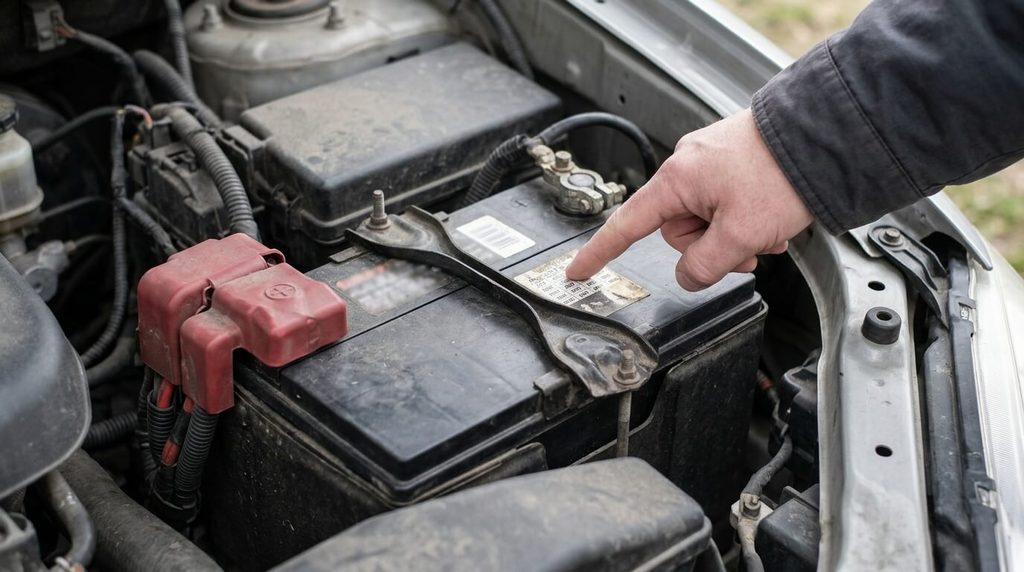
Look for the replacement receipt, service history, or an installation-date label. A manufacturing or shipping code is not necessarily the date the battery went into your car. If only a code is available, ask the battery manufacturer or installer to interpret it because coding systems vary.
Buying a used car does not reset the battery’s age. Ask for its replacement history instead of assuming the battery is as new as your ownership. If the history is missing, get a baseline health test and keep that result with your maintenance records.
Warning Signs That Mean Test It Now
A slower-than-usual engine crank is a reason to arrange testing promptly. Clicking during a starting attempt or needing repeated jump-starts also deserves attention. These symptoms can involve a weak battery, but poor connections or other starting-system faults can look similar.
Tell the technician when the problem occurs, such as after sitting overnight or only after several days parked. Mention recently fitted accessories and any charging warnings. That history helps distinguish an aging battery from a recurring drain or charging fault.
Do not charge or jump-start a battery that is frozen, leaking, swollen, or visibly damaged. Keep sparks and flames away, and avoid touching leaked fluid. Arrange qualified help rather than repeatedly trying to start the vehicle.
A Battery Warning Light Is Not a Replacement Diagnosis
A battery-shaped light that stays on while driving can indicate a charging-system fault, not simply an old battery. Replacing the battery without diagnosing that fault may leave you with the same problem. Follow your owner’s manual, arrange prompt assistance, and stop safely if the vehicle displays a stop warning, loses electrical functions, or develops smoke or a burning smell.
Should You Recharge or Replace It?
A battery’s state of charge describes how charged it is now. Its state of health describes its condition and ability to do its job. A voltage measurement can help assess charge, but it doesn’t show how much useful starting performance remains.
A shop can use an appropriate conductance or load test to assess performance. Conductance testing evaluates the battery’s electrical response, while load testing checks how it performs while supplying power. The tester must be suitable for the battery type and configured with the correct rating; CCA means cold cranking amps, a standardized measure of cold-starting ability.
The battery tester’s result definitions distinguish a serviceable battery, a battery needing recharge, an inconclusive low-charge result, and one requiring replacement. A charge-and-retest instruction means more work is needed before you can draw a conclusion. Ask for the result rather than accepting a low-voltage reading as the entire diagnosis.
Before You Agree to Replacement
Ask whether the battery was sufficiently charged for a valid test and whether the tester used the correct battery type and rating. If the car repeatedly goes flat, ask whether the charging system and parked electrical drain also need diagnosis. A replacement recommendation should explain the failed condition, not just point to the battery’s age.
What the Battery Test Result Means
Ask for the printed or digital result so you know whether the recommendation is to recharge, monitor, or replace. Testers use different labels, so the wording below is a general interpretation rather than a universal display menu. A low-charge result may need charging, and another test is needed before the battery’s condition can be judged.
| Result or recommendation | What to do next |
|---|---|
| Good | Keep using it and follow the recommended test schedule. |
| Good, recharge | Recharge as directed and investigate why it was low. |
| Charge and retest | Complete charging and testing before treating the result as a confirmed failure. |
| Weak or recheck soon | Discuss preventive replacement and follow-up based on age, symptoms, and reliability needs. |
| Replace or bad cell | Arrange replacement; follow the technician’s safety advice rather than attempting more charging. |
If the battery passes but the car still struggles to start, the problem remains unresolved. Connections, cables, the starter, or other vehicle systems may need testing. A good battery result is a reason to continue diagnosis, not replace unrelated parts by guesswork.
Two Examples That Lead to Different Decisions
Suppose a two-year-old battery goes flat after a dome light is left on. Once safely charged, it passes a suitable health test and no further fault is found. Replacement is not automatically necessary, although the discharge may have affected its life.
Now consider a five-year-old battery with slow starts and a confirmed replacement result after proper testing. Another jump-start does not restore the performance it has lost. Replacing it promptly makes more sense than waiting for a complete no-start.
Why Some Car Batteries Need Replacement Earlier
Heat, frequent short trips, and long periods parked can change how soon testing or replacement becomes necessary. Our guide to how long car batteries last explains the broader factors that affect lifespan. When deciding whether to replace it, focus on whether your battery can still perform reliably after proper charging and testing.
Age also matters on a low-mileage vehicle. A car driven only on weekends can still have an aging or undercharged battery. There is no dependable mileage interval that replaces checking age, usage, and condition.
Do not assume every slow start means the battery has worn out early. A loose hold-down can allow damaging vibration, and charging faults can cause persistent undercharging or overcharging. Correct those conditions so the replacement isn’t exposed to the same problem.
AGM, Start-Stop, Hybrid, and EV Batteries Need Extra Care
AGM means absorbent glass mat, and EFB means enhanced flooded battery. Both are lead-acid designs used in demanding applications, including many vehicles with automatic engine stop-start. They do not permit ignoring testing or assuming a guaranteed longer replacement interval.
The start-stop battery replacement guidance warns against substituting a conventional battery where AGM or EFB technology is required. Confirm the approved type and specification for the exact vehicle. A cheaper battery that fits the tray can still be unsuitable for its electrical demands.
Some vehicles also require a battery sensor reset, registration, or coding after replacement. The manufacturer’s battery replacement instructions provide one example of a required sensor reset. That is a vehicle-specific requirement, not a universal sequence to copy onto another car.
This article’s three-to-five-year planning range concerns conventional low-voltage lead-acid batteries, not the high-voltage traction pack that drives a hybrid or EV. Some vehicles use a lithium-ion low-voltage battery, with different service requirements. The low-voltage battery identification instructions illustrate why you must confirm the installed chemistry before selecting parts or procedures.
What to Confirm Before Paying for a Replacement
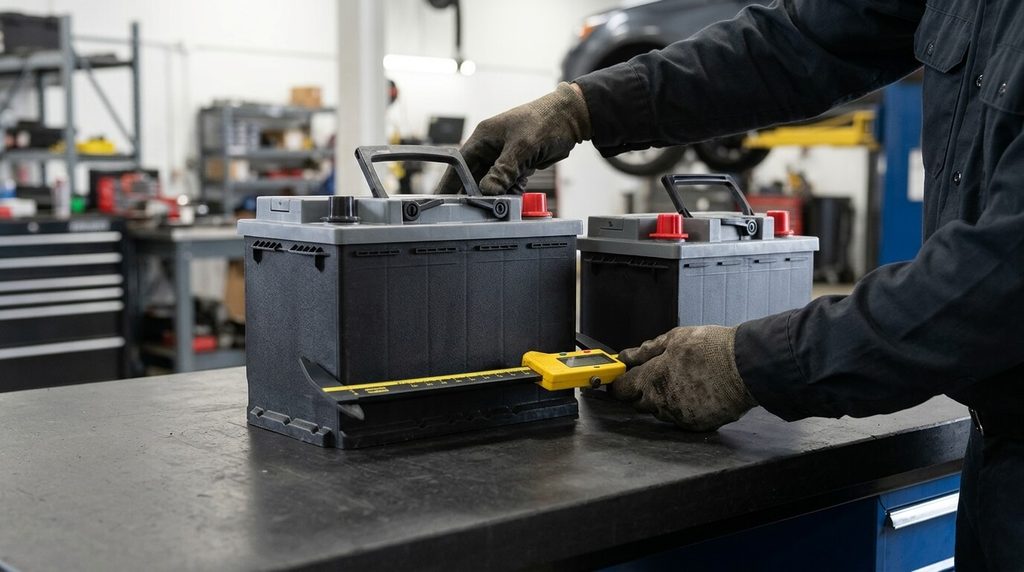
Use the year, make, model, engine, and relevant equipment to confirm fitment. Verify the required technology, case size, terminal layout, mounting, and vent connection where fitted. Battery ratings must also meet the vehicle’s specification, not just match the dimensions.
Replacement Checklist
- Review the battery-health result and any unresolved charging fault.
- Confirm the correct battery specification and technology.
- Ask whether sensor reset, registration, coding, or feature relearning is required.
- Check whether the quote includes installation and required programming.
- Review warranty terms, any core charge, and old-battery recycling.
- Record the installation date and retain the receipt.
Replacement cost varies with the required battery, access, labor, and programming. Get a complete fitted quote instead of comparing only shelf prices. Return the old lead-acid battery through an appropriate retailer or recycling program rather than putting it in household trash.
How to Reduce Avoidable Battery Problems
Switch off accessories you control before leaving the vehicle and investigate equipment that repeatedly drains it while parked. For long storage or frequent short trips, ask about an approved maintenance charger compatible with the battery and vehicle. Follow the manual’s connection points and storage guidance rather than adopting a universal charging routine.
Keep required covers, heat protection, and hold-down hardware correctly fitted. Do not open a sealed or AGM battery to add water. These habits can reduce avoidable problems, but no maintenance routine reverses normal aging or guarantees a particular lifespan.
Conclusion: Test Before You Decide
When deciding how often to replace a car battery, use three to five years as a planning range and begin annual testing around year three. Test sooner if you have starting trouble, repeated discharge, or charging warnings. Replace based on confirmed condition and your reliability needs, then make sure the new battery and installation meet the vehicle’s requirements.
Frequently Asked Questions
Should I replace my car battery after three years?
Not automatically, because three years is a useful point to begin regular testing. A serviceable battery may continue working beyond that age. Replace it sooner if testing confirms failure or damage requires replacement.
Can a car battery last longer than five years?
Yes, some do, but that does not make extended life predictable. Have an older battery tested and weigh the inconvenience of a breakdown. Choosing preventive replacement can be reasonable even before it can no longer start the vehicle.
Do I need a new battery after one jump-start?
No, a jump-start alone does not establish that the battery has failed. Charge and test it as appropriate, and identify why it discharged. Repeated jump-starts are a reason for diagnosis, not a long-term workaround.
Does a normal voltage reading mean the battery is good?
No, voltage alone cannot confirm remaining starting performance. A charged battery can still be too deteriorated to perform reliably. Use an appropriate health test and investigate other starting faults when necessary.
Should I replace the battery before winter?
Arrange testing before cold weather, especially when the battery is older or starting has slowed. Replace a failed battery and discuss a marginal result before relying on it for important trips. Winter itself does not create a universal replacement deadline.

